
with Yuri Frolov
YF: Thank you so much for joining me today. Let’s begin with a simple question: could you please introduce yourself and share a bit about your background?
SA: Sure! My name is Shintia, I’m Indonesian. I earned my Bachelor’s degree in Landscape Architecture from Bogor Agricultural University in Indonesia. I then pursued my Master’s at Wageningen University in the Netherlands, majoring in Environmental and Social Studies. Now, I’m in my second year of a PhD program at the University of British Columbia (UBC).
YF: That’s impressive! Could you walk me through your academic journey—your research at each stage, from undergraduate to your doctoral studies?
SA: Absolutely. My academic focus has evolved quite a bit. During my undergraduate studies, I concentrated on industrial landscapes. I explored how factory complexes could enhance their environmental performance, especially through design. For instance, Indonesian regulations mandate 30% of a site be designated as green open space. I looked at how this space could serve multiple functions—like reducing odor from sewage treatment facilities with specific types of plants, or using windbreaking trees to extend the durability of buildings. For my master’s research, I shifted focus to agritourism in the Netherlands. I examined how smallholder farmers diversified their income by incorporating tourism into their agricultural operations. Interestingly, some eventually made tourism their primary source of income, which revealed a significant shift in how rural livelihoods evolve in a developed context. Now, in my PhD, I’m focusing on indigenous communities and sustainable landscape approaches in Indonesia. Specifically, I’m examining the intersection of customary land governance and state land tenure systems. In many Southeast Asian countries—including Indonesia—there’s often a disconnect between state claims to land ownership and the long-standing presence of indigenous communities. This tension can lead to conflict, especially when land is allocated to companies with legal permits that overlap with customary territories. I’m also exploring how gender dynamics intersect with land/forest stewardship.
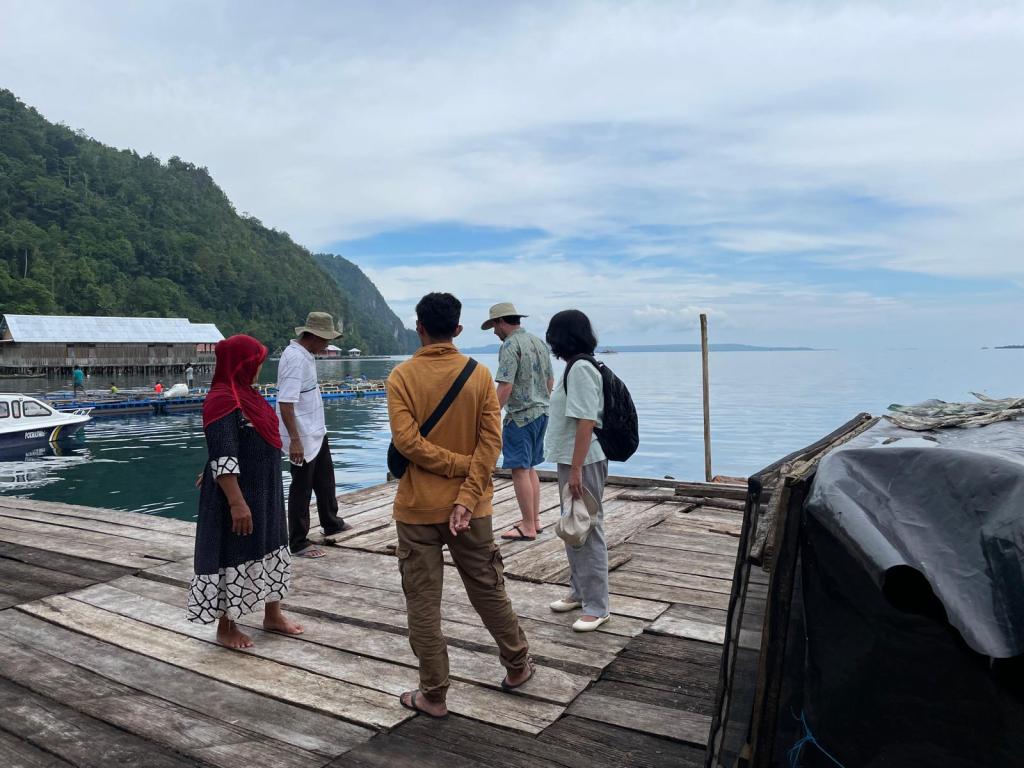
YF: That sounds like a fascinating and important line of research. Have you started working on your dissertation already?
SA: Yes, I’ve actually already begun. When I saw the PhD position advertised by UBC, the focus aligned well with my background, so I applied. The process was quick—after submitting references from a professor and my previous supervisor, I was selected by the lab. The additional requirement from the Graduate School was to complete some foundational forestry courses, given that my academic background was in landscape architecture, environment, and social studies rather than forestry. I’ve completed my coursework and my scoping study, and I’ll return to Indonesia in June for my second round of data collection.
YF: That’s exciting. I notice that you bring both academic knowledge and practical experience to your work. Can you share more about your professional career before starting your PhD?
SA: Certainly. My career began in journalism—I worked for the largest newspaper and publishing group in Indonesia. Then I moved into the development sector, working for a Belgian NGO called VECO Indonesia (Vredeseilanden Country Office in Indonesia), which promoted sustainable agriculture in eastern Indonesia. After that, I spent some time in the private sector with an environmental consultancy focused on Clean Development Mechanisms (CDM) and AR-CDM.
I also interned at the Sayogyo Institute, a local NGO linked to Bogor Agricultural University, where I learned about agrarian reform, tenure, and poverty alleviation issues. Then I joined CIFOR (Center for International Forestry Research), where I spent five years conducting research on REDD+ (Reducing Emissions from Deforestation and Forest Degradation). My work covered financing, governance, safeguards, and community-level issues in Southeast Asia, particularly in Indonesia, Laos, and Vietnam, as well as comparative studies involving Latin America and Africa.
After CIFOR, I worked for UNOPS (United Nations Office for Project Services) on peatland restoration projects in Indonesia, managing funding from the Norwegian government under a Letter of Intent with the Indonesian Government. After the project finished, I was offered a position with South Pole, a carbon project development company, where I oversaw projects in the Asia-Pacific region before receiving my PhD scholarship and joining UBC.
YF: Thank you for sharing that. Let’s shift our attention from your past to your present. Now, as a student from Southeast Asia, how have you found the experience of studying and living in Canada?
SA: I really appreciate how accessible nature is here—it’s so easy to go hiking or explore the forest, which isn’t something I can easily do back in my city life in Indonesia. The weather here is milder than in the Canadian interior, though it’s still cold from a Southeast Asian perspective!
What’s been particularly striking is Canada’s active reconciliation process with Indigenous communities. I admire how the government is taking concrete steps beyond discussion, which I believe is something other countries—like Indonesia—could learn from. This also resonates deeply with my research focus.
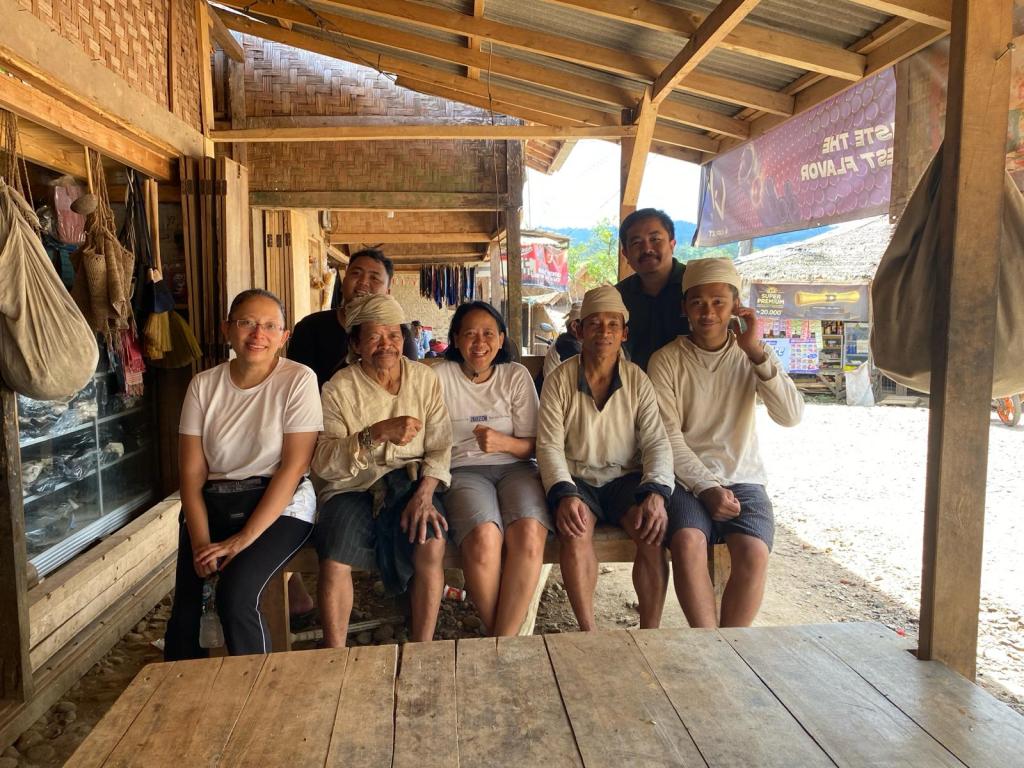
YF: That’s a thoughtful reflection. And now for our final topic: you received an award from the Canadian Southeast Asian Studies Initiative. How did you hear about it, and how do you plan to use it?
SA: My supervisor told me about the opportunity and encouraged me to apply, as my research fits well with the initiative’s focus on Southeast Asia. I wasn’t expecting much, as I had applied for several scholarships in the past without much luck, but I decided to give it a shot. I was genuinely thrilled when I found out I had been selected. This award is incredibly helpful for my research. In addition to supporting my living allowance, I also want to make my findings accessible to a broader audience, not just academics. Based on my previous experience in journalism and CIFOR, I plan to create a short documentary that captures the socio-ecological changes in indigenous communities. It won’t be a high-budget film, but something shareable via social media. With the right optimization, it could help voice the silent, beyond academic and policy circles.
YF: That’s an amazing idea. We will share it through our social media, I promise! Thank you so much for this rich and insightful conversation.
 Canadian Southeast Asian Studies Initiative