
with Yuri Frolov
Abstract
This talk explores the Southeast Asia Digital Library (SEADL), its mission to digitize and provide open access to rare Southeast Asian materials, its evolution, and funding. Key initiatives like the Thai Film Project and opportunities for collaboration and student engagement are highlighted, alongside future goals to expand collections, partnerships, and global impact in Southeast Asian studies.
YF: Thank you so much for joining us today. To begin, could you share SEADL’s history and what it aims to accomplish?
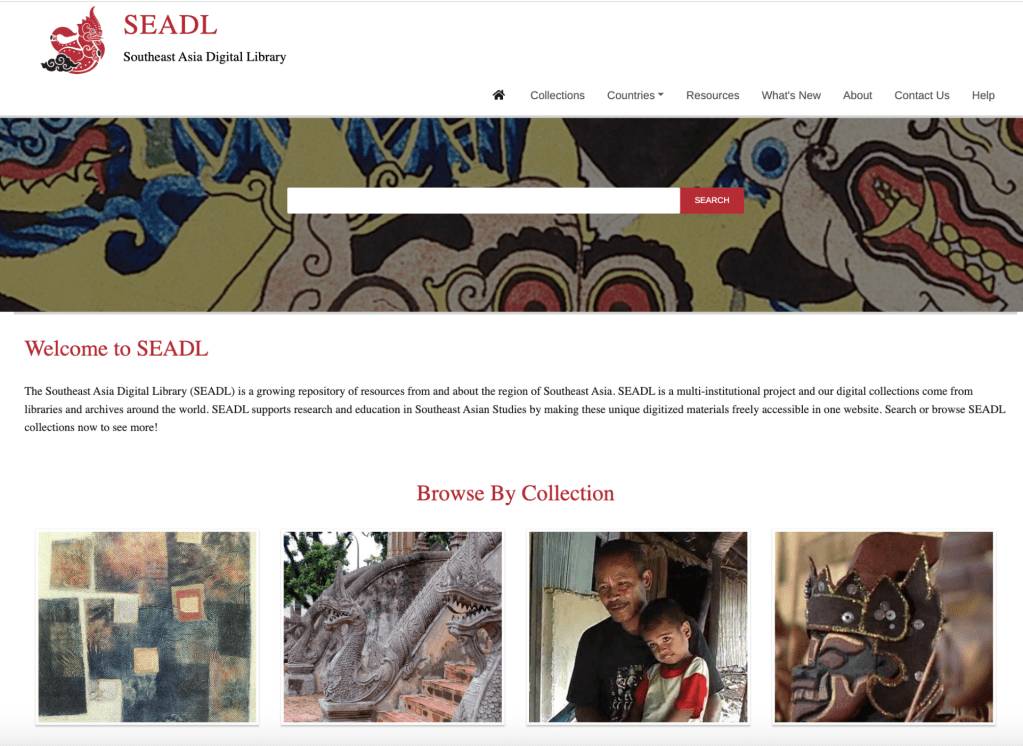
EZ: Of course! SEADL, or the Southeast Asia Digital Library, was established around 2005 with a grant from the U.S. Department of Education. The goal was to create an open-access repository for rare and unique archival materials either from Southeast Asia or about Southeast Asia. This idea came about because several U.S. libraries with significant Southeast Asia studies collections realized it was difficult to digitize these materials regularly at individual institutions. Universities, understandably, have to prioritize resources for various disciplines, so Southeast Asia materials don’t always come first in line. When SEADL was created, the idea was to provide a consistent avenue for digitizing and aggregating Southeast Asian materials into a single, easily searchable and free platform, which is far more convenient for researchers than navigating multiple library websites. In 2018, the Henry Luce Foundation gave us a generous grant to revitalize SEADL and help the project transition to a more sustainable future. This funding was instrumental in formalizing our organizational structure into a consortium of multiple universities. Also, it allowed us to hire a full-time digital librarian and web developer, completely redesign and upgrade our website using best practices, and support the digitization of three new collections, which are still works in progress.
Source: sea.lib.niu.edu
YF: That’s fascinating. Could you clarify SEADL’s relationship with Cornell University? Is it the primary base of operations?
EZ: That’s a great question! Cornell is just one member of the consortium. SEADL website is hosted by Northern Illinois University (NIU), which handles the technical aspects like digital preservation, hosting, and ingesting new materials. However, my employment is with Cornell because they could provide the support necessary to hire and maintain a full-time employee. Cornell also serves as the financial manager for SEADL, processing member dues and maintaining the project’s funding account. In short, Cornell oversees the administrative side, NIU manages operations, and other member institutions contribute to shared governance, voting on new projects and bylaws, and participating in events.
YF: I see! Now, could you tell us a bit about your background and how you came to work with SEADL? I noticed from your LinkedIn that you studied at McGill, which makes for an interesting Canada-U.S. connection!
EZ: Yes! I earned my library degree from McGill, and while I’m an American, I absolutely loved my time in Montreal and had a wonderful experience in that program. Regarding SEADL, my expertise is in digital library project management, particularly in managing consortium-based projects where multiple institutions collaborate on a single initiative. Interestingly, I’m not a Southeast Asianist myself. This was a concern I had when joining SEADL, as I wondered how I could contribute without subject-specific expertise. However, my colleagues assured me that the project already had a strong network of Southeast Asianists to provide the necessary subject knowledge. My role is to bring expertise in digital libraries, ensuring the project is well-funded, runs smoothly, and stays on schedule. I also rely on our community and scholars for language and cultural expertise.
YF: That’s wonderful. Do you have a favorite new project at SEADL?
EZ: It’s hard to choose because everything in SEADL is so unique, but right now, I’m particularly excited about the Thai Film Project. This collection is led by Ohio University in partnership with the Thai Film Archive and features Cold War-era movies and cartoons digitized from film reels. Many of these films never made it to theaters and have never been seen by an audience—they’ve essentially been hidden in the physical archive. For some, their publication on SEADL marks their first public release. Currently, one film, The Curse of the Order, is available online. It’s a Hitchcockian murder mystery and quite fun! Over the next year, we plan to add several dozen more titles. All the films are in Thai, but they have English subtitles, which makes them highly accessible and a fantastic teaching resource, especially for undergraduate students.

Source: sea.lib.niu.edu
YF: That’s so exciting! Where do you see SEADL heading in the future?
EZ: We have three main goals. First, we aim to expand our consortium. Historically, our members have been based in the U.S., but we’re actively reaching out to institutions in Canada, Europe, and Southeast Asia to diversify our membership. Second, we want to continue growing our collections. For example, we’ve recently added projects like the Thai Film Project, a collection of Vietnamese diaspora monographs, and Cham language cassettes featuring chanting, language lessons, and folklore. SEADL thrives by continuously adding unique materials and making them open-access. Finally, we want to deepen our connections with institutions in Southeast Asia. While we already see significant usage from Southeast Asia—about 50% of our traffic comes from there—we want to include these perspectives in our administrative decision-making. Their voices are invaluable in guiding our priorities.
YF: It’s great to see such ambitious plans. Are there opportunities for students to get involved with SEADL?
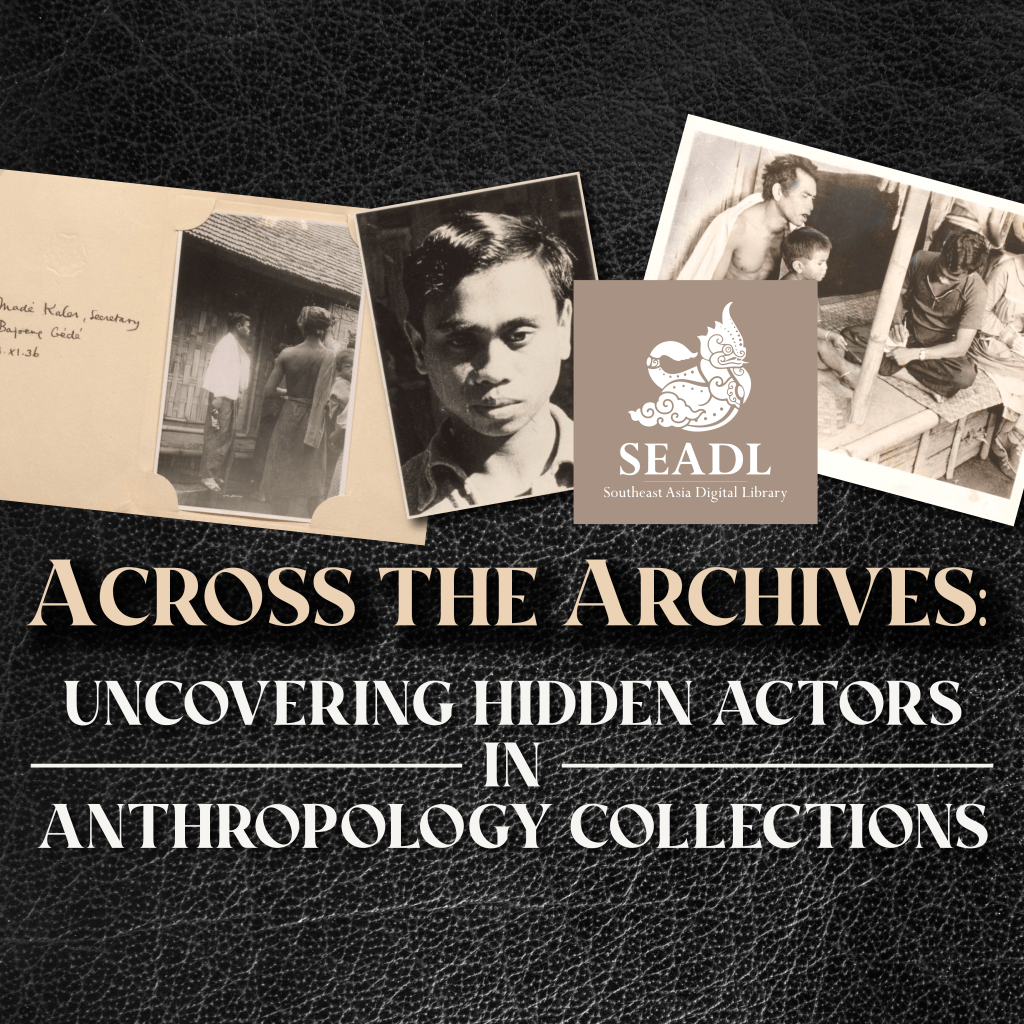
EZ: Definitely! For undergraduates, we offer an annual paper award. Students can submit research papers that incorporate primary sources like photographs, oral histories, or videos. Winning papers are published in SEADL, and these often become some of our most accessed items, showcasing the incredible quality of undergraduate research. Graduate students can participate in our webinar series, Across the Archives. Each webinar pairs two related archival collections from different institutions and invites researchers to discuss their projects. It’s a platform to highlight archival research and demystify the process of navigating collections. We’re always looking for speakers, so I encourage students and researchers to get in touch if they’re interested.
Source: sea.lib.niu.edu
YF: That’s amazing. Finally, how can Canadian institutions collaborate with SEADL?
EZ: There are many ways! Canadian institutions that are part of the Canadian Southeast Asian Studies Initiative (CSEASI) can contribute collections to SEADL or nominate speakers for Across the Archives. We also offer workshops tailored to undergraduate or graduate students, covering topics like critical information literacy, metadata creation, or using digital primary sources. These workshops can be customized for specific courses or audiences. Beyond that, we’re open to hosting events or collaborating on new ideas. I encourage anyone interested to reach out—we’re always eager to explore new partnerships. I’m thrilled to see how we can collaborate further, especially with Canadian institutions. SEADL is here as a resource, and we’re always open to new ideas and partnerships.
 Canadian Southeast Asian Studies Initiative